Icemakers at Home: Which Option Is Right for You?
Combi cooler, freezer or dedicated icemaker? Compare the options, the connections each needs, and how to supply clean water in Lebanon.
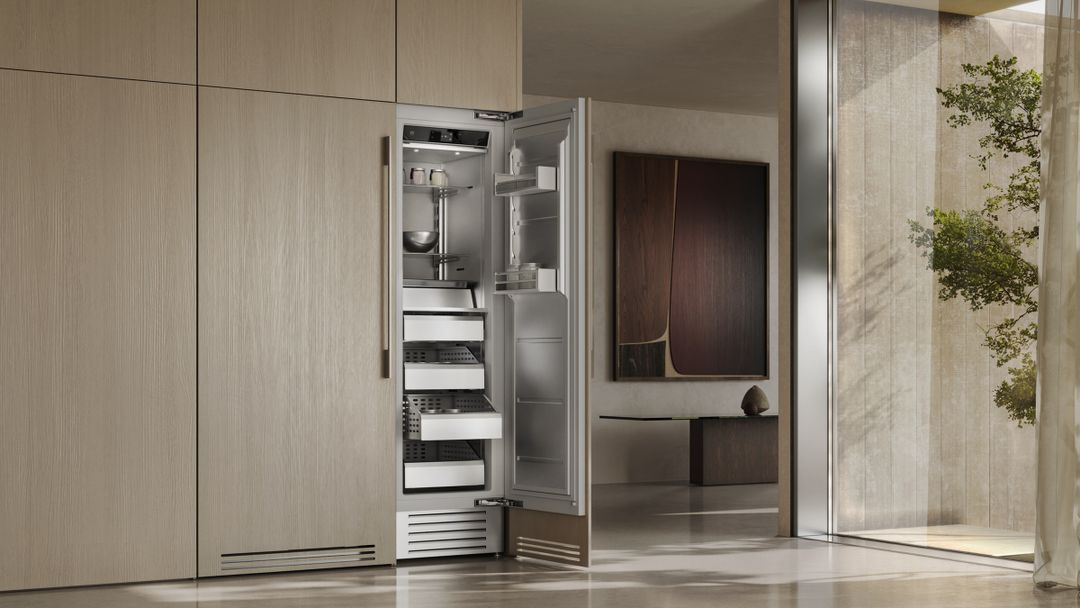
There are three ways to make ice at home: a combi cooler with an icemaker in its freezer compartment, a full freezer with an icemaker, or a dedicated icemaker. The first two need only a water inlet. A dedicated icemaker needs a water inlet and a water outlet, but makes far more ice.
Whichever you choose, the water you feed it matters as much as the appliance. Here is how the options compare, and how we recommend connecting them in Lebanon.
The three options
A combi cooler with an icemaker. A fridge and freezer in one appliance, with an automatic icemaker in the freezer compartment. It is the simplest way to have ice at home without adding another appliance. Example: the V-ZUG CombiCooler V6000 Supreme.
A full freezer with an icemaker. A dedicated freezer, usually paired with a separate fridge, with an automatic icemaker built in. It suits households that want generous freezer space as well as a steady supply of ice. Example: the V-ZUG Freezer V6000 Supreme.
A dedicated icemaker. An appliance designed only to make and store ice, typically installed under the counter in the kitchen, a bar or an outdoor area. Example: the PROHAUS undercounter icemaker, which is panel-ready so it can sit behind a cabinet front.
Fridge or freezer icemaker vs dedicated icemaker
How much ice. An icemaker in a combi cooler or freezer makes enough for everyday family use: cold drinks, a jug of water, the occasional glass for guests. A dedicated icemaker is built for volume. It produces ice continuously and keeps a large supply ready, which makes the difference when you entertain often or host large gatherings.
How the ice is stored. In a fridge or freezer, finished ice is kept frozen in a tray or drawer inside the freezer. A dedicated icemaker stores its ice in an insulated bin. As the ice slowly melts, the water drains away and fresh ice replaces it, so the supply stays fresh rather than sitting for days.
Space. A fridge or freezer icemaker uses part of the freezer compartment, so you give up a little freezer space but need no extra appliance. A dedicated icemaker needs its own place, usually an undercounter position in the kitchen, a bar or an outdoor kitchen.
Where it can go. Because it stands alone, a dedicated icemaker can be placed wherever you serve drinks, not only where the fridge is.
Connections: what to plan for
Combi cooler or freezer with an icemaker: water inlet only. The appliance needs a water supply line to fill the icemaker. Ice stays frozen inside the freezer, so there is no water to drain away.
Dedicated icemaker: water inlet and water outlet. As well as a supply line, it needs a drain connection for the melt water from its storage bin.
This matters most at the planning stage. A water outlet has to be positioned before the kitchen is built, so if you are considering a dedicated icemaker, tell your kitchen designer early. Our team plans these connections as part of every kitchen we design.
Connecting the water supply in Lebanon
Ice goes straight into your glass, so it should be made from water you would happily drink. Tap water in Lebanon is generally not recommended for drinking, so we do not connect icemakers directly to the mains. Instead, we recommend one of two set-ups, depending on how much ice you use.
Light to medium use: a water gallon with a pump
For most households, the simplest solution is a 20-litre water gallon, the same bottled water you already drink, connected to a small pump that sends water to the icemaker.
No changes to your plumbing
Your ice is made from the same water you drink
When the gallon is empty, you simply replace it
Heavy use: an RO filter
If you use a lot of ice or entertain often, changing gallons quickly becomes a chore. For heavy use, we recommend a reverse osmosis (RO) filter connected to your water supply. It purifies water continuously, so the icemaker never runs short.
An RO system needs space under the counter, a drain connection and periodic filter changes, so it is best planned with the kitchen.
At a glance
Feature | Combi cooler with icemaker | Freezer with icemaker | Dedicated icemaker |
Ice quantity | Everyday family use | Everyday family use | High volume, continuous |
Ice storage | Tray or drawer in the freezer | Tray or drawer in the freezer | Insulated bin, melt water drains |
Connections | Water inlet | Water inlet | Water inlet and water outlet |
Extra appliance needed | No | Usually paired with a fridge | Yes, its own position |
Typical placement | Kitchen | Kitchen | Kitchen, bar or outdoor kitchen |
Our model | V-ZUG CombiCooler V6000 Supreme | V-ZUG Freezer V6000 Supreme | PROHAUS undercounter icemaker |
Which one is for you?
Choose a combi cooler with an icemaker if:
You want ice for everyday use without adding another appliance
You prefer a single connection, with no drain to plan
Choose a freezer with an icemaker if:
You want generous freezer space alongside a separate fridge
Everyday ice use is enough, with no drain to plan
Choose a dedicated icemaker if:
You entertain often or host large gatherings
You want a large supply of ice ready at all times
You would like ice in a bar or outdoor kitchen, away from the fridge
You can plan a water outlet as well as an inlet
Whichever you choose, pair it with the right water supply: a gallon with a pump for light to medium use, or an RO filter for heavy use.
Our team can help you choose the right option and plan the connections as part of your kitchen. Visit our Jdeideh showroom to see our refrigeration range. We deliver and install free of charge throughout Lebanon, with a 2-year warranty.
Frequently asked questions
Does a fridge icemaker need a water connection?
Yes, it needs a water inlet to fill the icemaker. It does not need a drain, because the ice stays frozen in the freezer.
Why does a dedicated icemaker need a drain?
It stores ice in an insulated bin rather than a freezer. As the ice slowly melts, the water drains away and fresh ice replaces it, so it needs a water outlet as well as an inlet.
Can I connect an icemaker to tap water in Lebanon?
We do not recommend it. Tap water in Lebanon is generally not suitable for drinking, so we connect icemakers to a 20-litre water gallon with a pump for light to medium use, or to an RO filter for heavy use.
Do I need to plan an icemaker before building my kitchen?
Ideally, yes, especially for a dedicated icemaker or an RO filter, which need a water outlet. Planning the connections early avoids changes later.