How to Clean & Maintain Your Stainless Steel Sinks
Stainless steel is not all the same! In their original form, stainless steel surfaces with a natural finish are resistant.
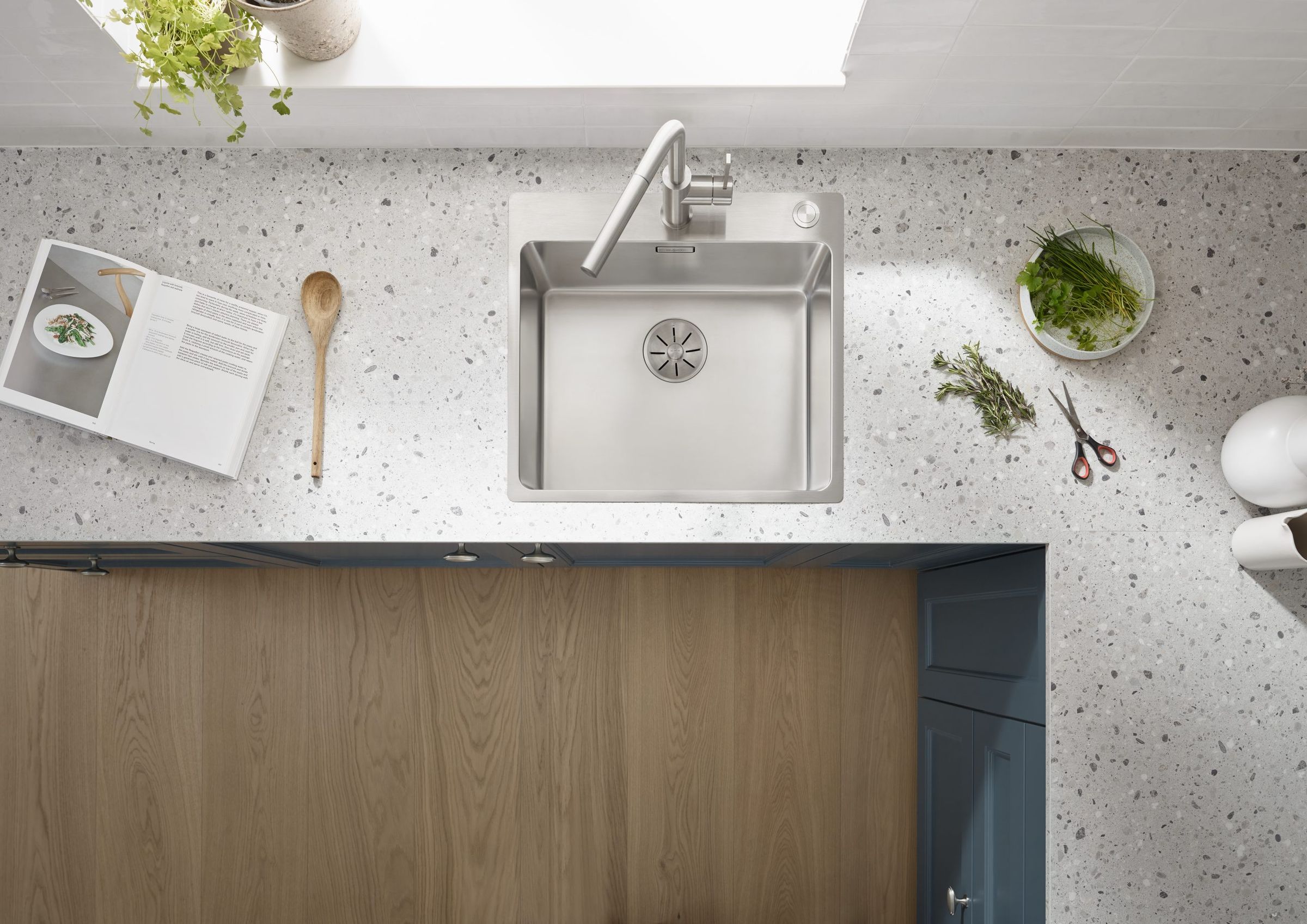
To clean these surfaces along with the linen-look, satin matt, and durinox you should use anti-limescale, lemon, or vinegar cleaning products.
Regular Basic Cleaning
Daily Cleaning
How to clean it properly
How to remove Stubborn Limescale
What to avoid doing when cleaning
Durinox Cleaning
Satin Polish/ Brushed Finish Cleaning
Surface finishes for stainless steel sinks:
|
|
|
Durinox | Satin Polish | Brushed Finish |



Regular Basic Cleaning:
You should give your stainless steel sink a basic clean with a suitable polishing agent every 3 to 4 weeks. One exception is stainless steel sinks in Durinox, satin matt finish, natural finish, or a linen look. As these materials are more delicate, you should avoid using polishing agents on them.
The following applies to all stainless steel versions: the polish seals the surface so that less limescale can form. In addition, your sink becomes less susceptible to unsightly fingerprints. When cleaned regularly, a protective layer will form over time, making scratches disappear and increasing the shine.
Daily Cleaning:
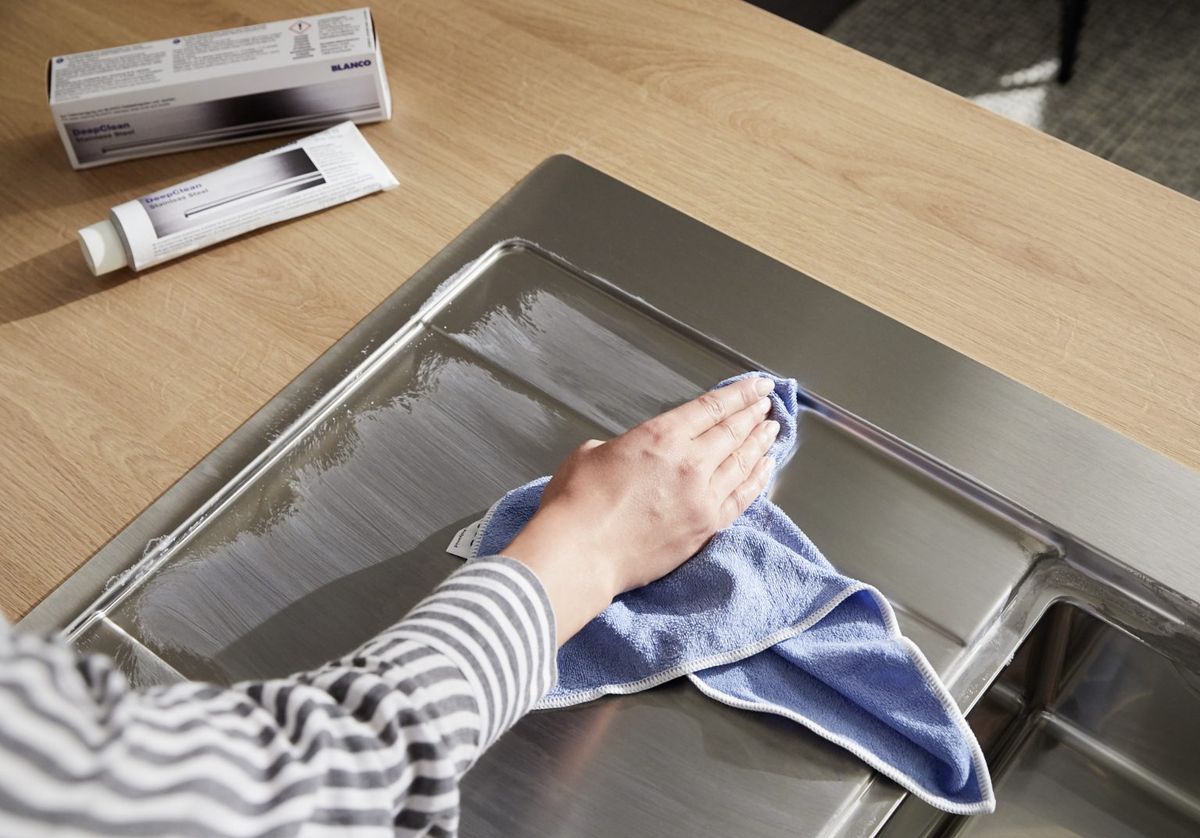
Here is how to clean it properly:
When cleaning, avoid circular movements, as this can cause permanent changes to the surface structure. This is particularly applicable to surfaces with a satin matt finish. Note also that vigorous polishing in a particular spot may cause changes to the level of gloss in this area.
How to Remove Stubborn Limescale:
Vinegar or lemon-based cleaning agents are a good option for dealing with limescale. They clean thoroughly and are easily biodegradable. However, if the cleaning agents contain additives, you will need to tread a bit more cautiously. (Ingredients added to such detergents tend to be too aggressive for most stainless steel surfaces). If they also contain limescale-removing substances, small particles in the fluid may rub against the stainless steel surface and cause it to change its appearance.
It is best to opt for pure vinegar essence. Dilute the vinegar essence with water in a mixing ratio of 1:10.
Alternatively, you could use the BLANCO Care products: These formulas were developed for use on BLANCO sinks and mixer taps. They clean gently yet effectively.
The same applies when cleaning stainless steel, always work in the direction of brushing. Avoid circular movements. Afterward, rinse surfaces thoroughly with clean water so that no traces of the cleaning agent remain. Finally, rub the sink dry with a microfiber cloth.
What to avoid doing when cleaning:
Do not use aggressive cleaning agents, abrasive cleaners, or bleach-containing hypochlorite
Do not use cleaning baths for silver
Do not use prickly brushes or the scratchy side of sponges (especially pot scouring pads)
Never use steel wool for cleaning
All these things can cause scratches and permanently damage the stainless steel surface of your sink.
Durinox Cleaning:
Durinox is extremely hard for uncoated stainless steel and is thus twice as resistant as conventional stainless steel surfaces; however, you should not use any polishing agents on it. A damp microfiber cloth or a soft sponge without any detergent is fine for daily cleaning. One main advantage is that Durinox stainless steel sinks are also impervious to fingerprints.
Satin Polish/ Brushed Finish Cleaning:
Surfaces with a stain polish or brushed finish require a little more care. They should be polished along the direction of brushing.